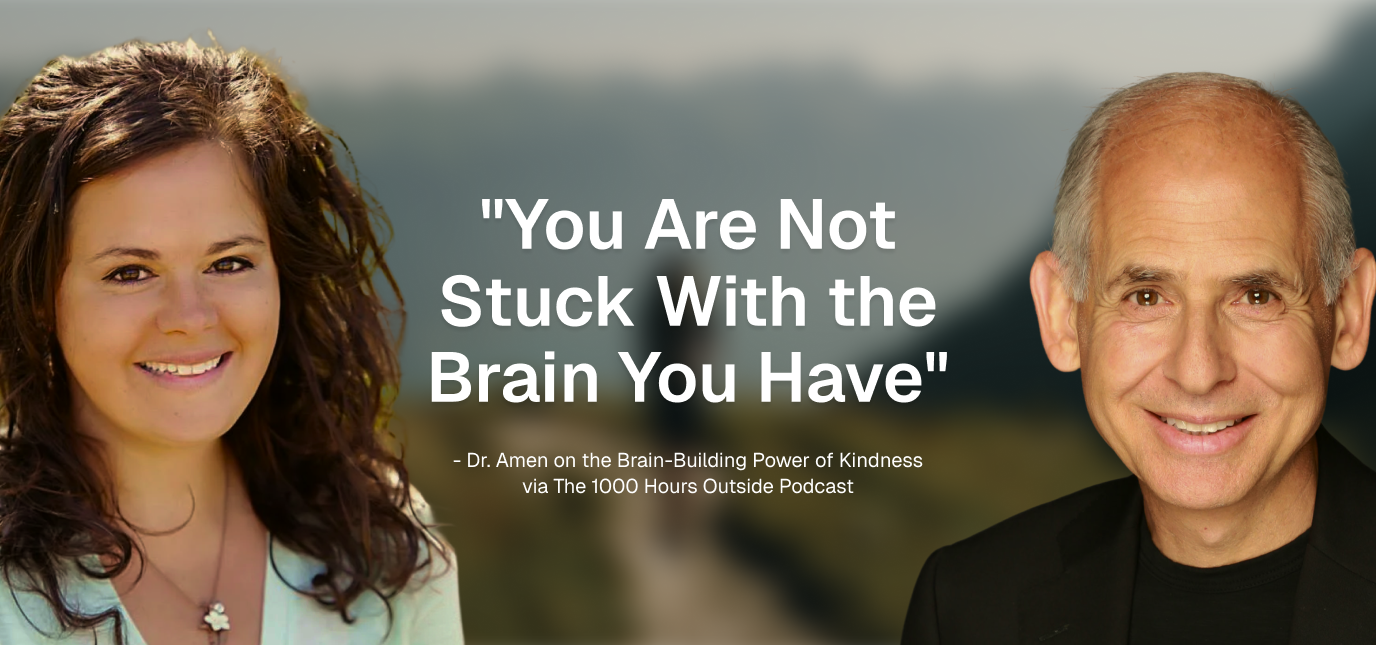
Few conversations connect brain science and everyday kindness as directly as Dr. Daniel Amen's appearance on The 1000 Hours Outside Podcast, hosted by Ginny Yurich. In the episode, titled "You Are Not Stuck With the Brain You Have," Dr. Amen joins Yurich for what the show describes as a conversation about "the most important, and most overlooked, part of our lives: our brain." And notably, the episode links directly to Good Neighbor Day America as one of its central resources.
Brain Health Isn't Fixed, It's Built
Drawing on decades of brain imaging and clinical work, Dr. Amen explains why so many everyday struggles with mood, focus, motivation, and even parenting trace back to brain health, and why that's actually encouraging news. If the brain can change, then so can the patterns that feel stuck. The episode covers the impact of screens and overstimulation on kids, and lands on a theme central to Good Neighbor's own mission: what the show calls "the brain-building power of kindness, learning, purpose, and time outside."
That framing matters. It positions kindness not as a nice-to-have extra, but as one of several concrete, brain-healthy habits, alongside purposeful learning and time spent outdoors, that shape how we think, feel, and connect with others.
Why the Episode Points Listeners to Good Neighbor Day America
Among the resources linked directly in the episode notes is Good Neighbor Day America, a fitting inclusion, given the conversation's emphasis on how service and connection support a healthier brain. It's a reminder that the case for kindness isn't just moral or emotional; there's a growing body of neuroscience suggesting that acts of service measurably shape wellbeing, for the giver as much as the receiver.
That's the same principle behind how Good Neighbor is designed: not a single, one-off gesture, but a pattern of small, consistent acts, the kind of intrinsic motivation that a brain-health researcher like Dr. Amen would recognize as genuinely sustainable, rather than something manufactured through gimmicks or one-time incentives.
Listen to the Full Conversation
For the complete conversation between Ginny Yurich and Dr. Daniel Amen, listen to the episode on Spotify.
Ready to put the brain-building power of kindness into practice? Find a way to be a good neighbor in your community and start building a habit that's good for the people around you, and, as the science suggests, good for your brain too.